this discussion has me thinking about digital cameras for the first time in a long time (since smartphones made them sorta redundant). with modern tech, how big could “just a camera” with decent storage and a battery be? i guess the main issue would be the display to review the photos? wonder if you could build something with a projector to do a quick check on a piece of paper or palm of your hand. does a tiny camera like this exist?
edit: not quite the “cigarette pack” one. something the size of a chapstick would be ideal. could even wrap the display around it.
I posit that smartphones are just fine and it’s us the people who are the problem that we can’t detach even when we clearly see that overusing the device is bad for us. Of course they are a platform for the most modern psychology to manipulate us but I view that as a good thing; the humanity collectively gradually builds resistance against manipulation. It’s slow and mostly does not work but it’s slowly getting there.
My digital detox started years ago and has been mostly successful; only ElixirForum, the orange website and one meme website remain. And I have learned to aggressively cut time on phone after waking up. At 30 minutes maximum I get up from bed because I’ve danced this dance: after being on the phone for 60-90 minutes you physically start feeling weaker, your motivation to even go to the toiled drops to unimaginably low levels and it’s very likely that you have ruined half your day at least, or 2-3 days ahead at worst.
I have only one trick up my sleeve to avoid too much distractions: “Is the thing I’m about to consume advance any of my top 5-10 goals?”. Once I started seriously asking myself this question and answering it sincerely without BS-ing myself, and started acting on the answers, 90% of my smartphone addiction problems disappeared in a manner of 4-5 weeks and have not returned.
FOMO is a powerful drug. Stay away from it. What this dorky looking chick thought about an obscure book is not important, and never was. If you really can’t close YouTube, go watch an episode of “How it’s made?”.
Indeed not at all revolutionary. Problem with addiction is that people know most of the picture most of the time but can’t muster the willpower to act on the knowledge – something I deeply sympathise with.
Maybe reframing the struggle can help some people and push them over the edge.
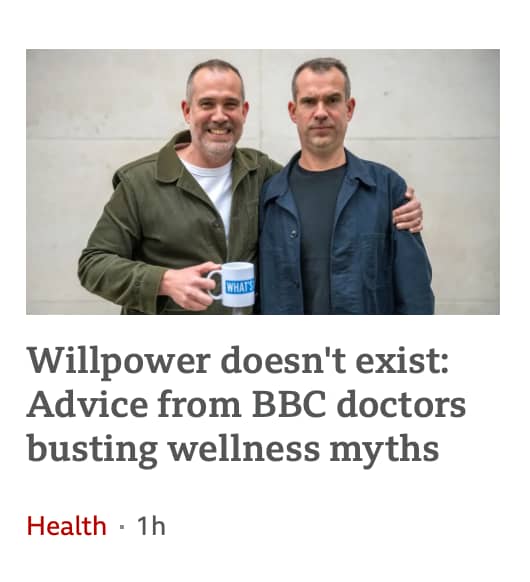
Their expert guest on this podcast episode, psychologist Kimberley Wilson, helped Xand understand that “there’s no such thing as willpower”.
Willpower is not this magic thing inside you, instead your ability to stick to something is “about the way you’ve arranged the world around you,” he says.
For example, by planning ahead and thinking about what you’ll have for dinner, you can more easily ditch the takeaway and eat something healthy.
I think setting yourself up for success is very powerful - as per some of the things said in this thread (delete apps from devices that make it easy to get sucked in, don’t use a YouTube account and always reject cookies (bookmark your must-check channels instead) etc).
So if willpower alone isn’t quite working for someone, perhaps changing the world around you could help..
I still have an iPhone but it stays at home all the time along with my iPad.
Only the iPad has IM (whatsapp, telegram, message) and other apps.
The iPhone has the bank apps (cuz apparently there is no other forking way to do banking now).
I have a burner (calls and sms) and an old iphone which has only apple music.
Every time i go out, i do a check of how much money I may spend and do the proper transfers and carry my wallet of course. Take the burner and old iphone.
I’ve been a month… doing just great. All my family and close friends now about this setup. they know they can only reach me by calling if i’m out. I’ve been moving in the afternoons drink coffee and reading books, walking around… no calls came through… no emergencies. just me and the present, local present.
There are religions with multi-thousand years of trial-and-error practice on how to ‘detox’. I think you have to join a spiritual community with a good teacher to really move the needle.
That said: try an experiment. Turn off TV and all forms of advertising for a month. Then try watching again. See how it feels.
I don’t follow any religions but I assume you’re referring to fasting, which I’d agree can have a positive impact on your body. However when people talk about a digital detox they are generally referring to breaking an addiction to some of the worst aspects of technology: apps that employ purposely addictive dopamine-hit algorithms, i.e those that make you endlessly scroll to periodically give you a dopamine-hit, or those that do similar through other means.
While most of the comments discuss various less technological devices, I’d like to join the thread about meditation and digital detox as a practice.
I did two 5-day silent retreats (aka Vipassana, though there are minor differences) this year and it’s been the best thing I’ve ever done as far as the baseline dopamine reset.
Once back, I’ve had zero urge to interact with any tech unintentionally. Meaning, every time I picked up the phone or sat in front of my computer, I couldn’t help but have a strong intention to do something specific. Otherwise, the whole idea of using the device seemed silly.
I’m using the past tense because that state does wane. I’m having mixed results day to day trying to maintain it, but it requires 30+ minute meditation sessions.
While I might get upset about not having such state 24/7, that deep practice has shown me that such state is possible to begin with, and that achieving it is a trainable skill. That’s more than enough for me to keep practicing.
That whole experience made me think that the problem isn’t the devices but my relationship with them, or more broadly, the extent to which I crave a quick dopamine hit. Which makes me think that, unless I address the dopamine problem first, all other solutions are kinda backward. In a similar way to how an unhealthy person spends hours researching and ordering supplements while happily overlooking sleep and exercise.
Full support. Bad health did that to me, it forced me to prioritise very aggressively. I always loved just tinkering but at one point I realised I was just toiling meaninglessly on the computer because I did not want to do other things (more important ones at the time).
After that clicked, the rest followed almost instantaneously: I don’t sit at the computer or even look at my phone if I don’t have an idea what to do. I give myself a budget of 30-60 minutes a day of idle scrolling through memes – but news are heavily curated and time-boxed, and YouTube is a conscious decision to take time out of my day for education.
Exactly, and I said so in a previous comment upthread. Smartphones might be megaphones for amplifying bad habits but it’s all on the human: we can and must tame their usage. My smartphone and computers are tangibly useful and a net positive in my life.
Of course others are free to make the Buddhist decision to refuse a battle that they feel they cannot win. I however stayed, fought and won.
I think this problem is somewhat similar to my other addictions in the sense that there are many paths to the other side.
Some find healthier substitutions. Some do it by reducing the exposure to the trigger. Some do it with rehabs. And some are lucky to fight it through some form of reasoning and mindful effort like you did.
And all those methods probably have similar trade offs as if e.g. we were talking about alcoholism.
For example, it’s easy to start staring at your phone when everybody else does so at the restaurant table, just like rehabs don’t generally work if you get back to the same environment where drinking is the primary method of bonding and/or escaping reality.
Ultimately, again like with other addictions, the progress starts when one accepts that there is a problem and it ruins their lives.
I’ve been meaning to come back to this thread and a TikTok I just saw has reminded me to!
I wanted to come back to say this only works, temporarily! So while I stand by it being a good first step what’ll happen is that over time you start making it work and end up using it more and more. So for instance the inconvenience of having to charge up the device - you end up plugging it in automatically! The inconvenience of not being able to carry it around as much - you end up doing just that (eg, even taking it on to the loo!)
Something I think is better (so the above could still be used but in conjunction with other things) is de-saturating your device via accessibility options:
He’s spot on - once you’ve done this for a week, then just taking a peak at what it was like you will see how over-saturated everything is - no wonder people prefer their screens to real life!! The more you decrease saturation the less you actually want to use your phone, but even minimal de-saturation has a tangible effect.
And the video that brought me back to this thread:
This is actually something I’ve been experimenting with - going back to pastimes that weren’t as damaging, such as gaming and watching television shows and movies. I think when you combine it with desaturating your phone, it really can help break the habit.
You could probably replace gaming/watching shows with whatever you did before these dopamine-hitting-scrolling-apps came about.
A great book to read about this is Digital Minimalism by Cal Newport. The book is all about developing your own personal philosophy on how you use technology. Part of the program includes a 30 day digital declutter, where after some time away, you only re-integrate things that have value to your life, and you do it in a way so you get the most out of it with the least negative impact. I highly recommend it. I honestly think everyone should do a digital declutter at least once a year. Digital Minimalism: Choosing a Focused Life in a Noisy World by Cal Newport | Goodreads
There’s a few other super easy tricks and tools to help you change your habits. Don’t have your phone with you in your workspace (you can get authentication codes on your machine or just get up and walk to another room). Use blockers like Freedom or Cold Turkey to add some friction to any sites or apps you find yourself compulsively using. Wear a normal wristwatch so you’re not looking at your phone to just see what time it is.
When it comes to a lot of these things, most people don’t need an all-or-nothing approach. What they really need is some time away so they can re-calibrate, and some different habits. Awareness is a huge one, it’s amazing to see how often you are reaching for your phone and going to check out something on total auto-pilot. This is why blockers can be so huge - it’s not that you couldn’t circumvent these, it’s that you are mentally tabbed-out when you go to open HN or Twitter, and it’s like the device is now stopping you and saying “hey, what are you doing?”
I’m fortunate in that I never got into social media. I never really saw the appeal. I think the key to maintaining a healthy relationship with our devices is to adopt a pull model instead of a push model.
Social media and other content-based apps are designed around a push model. The device or app pushes content to you in an attempt to get you to engage with its ad platform. I prefer a pull model where I explicitly pull specific things I’m interested in. I can still keep up well enough with what’s going on by checking in on the few youtube channels I actually like that cover current events in different tech spaces, or when someone in one of the discord communities I’m a part of posts an article. If I find the article or topic the youtuber covered interesting, I’ll do a search for the topic, and when I do that intentional search, I usually find much more interesting things than what gets covered in the clickbait that gets the most attention and “shares”.
Due to this slower more personal approach to content, I can’t really participate in meme culture and I often can’t keep up with whatever new slang or trend is happening on the internet, so I’ve been told I’m really old for my age, but I find that I don’t really miss out on anything meaningful because the things that are actually important to me are the things that I intentionally seek out myself.
Me too. But after I last responded I took a couple of days off and then was overwhelmed with the responses. I’ll have to review.
I have not been very successful with meditation, though have started carrying around a notebook instead of my phone at sometimes. It’s been a big help in actually writing stuff down. I’ve never been successful at taking notes on my phone.
Another thing I’ve been doing lately is a massive de-clutter, mostly in preparation for moving, but also because I’ve been carrying stuff around with me I’ve had since I was a child. Some switch just flipped and now I’ve gotten rid of SO much stuff. I just made ~$600 selling records Nowhere near what I would have paid for them but I haven’t listened to any of them in 10 years. Anyway, I highlighted your response as I’m accepting that I wouldn’t actually need to keep such things, just pass 'em on when I’m done with them. This is obvious to many people but not obvious to so many others.
Why would you be ever successful at that? It’s extremely clunky and it makes me want to tear my hair out.
Mediation is one of those very open-ended things where people often over-fixate on a method or two and if it does not work for them they just give up. One way I have made an ex-girlfriend discover mediation was tell her to just lie down, close her eyes and avoid any particular train of thought; thinking about anything and everything was permitted but not thinking about it for more than a few seconds. It took her 7-8 sessions and she reported feeling much better and we then moved on to the more classic Silva method of just focusing on counting backwards and making a focused effort to banish all other more conscious thought. She succeeded, though it was very difficult, but ultimately succeeded and genuinely changed as a person.
Meditation is not like learning to do, I don’t know, wood crafting or anything like that. It’s basically connecting with yourself by silencing the voices that get in the way. Some people achieve that by drinking or drugs and if they don’t get addicted, the effects of those temporarily used substances actually become a net positive in their lives.
Prayer by the religious people is also one powerful meditation technique; by the mere virtue of concentrating on just reciting the prayer and believing in it and genuinely feeling what is said in it you achieve the peace of mind that is required for your brain to shift to the more relaxed state. I am not religious and never was but I kind of envy religious people for that particular thing.
There are other ways. The thing with meditation is that it’s not a metric or a goal by itself. It’s a way to find how to connect with a more deeper you, one that usually sits isolated and is whispering to you but is constantly out-shouted by everything else in our lives. It’s like the super warm introvert person sitting in the corner of the party and never wanting to get in the way or shout in order to be heard and paid attention to – but if you go talk to it you’ll feel much better after.
Digital detox in general is an amazing thing. You will feel much better if you would go for some time offline and it would not really hurt you for sure. In few last years I didn’t took a job as I was mainly focused on improving my healthcare and focus on my hobbies.
I’m not really using smartphone. Sometimes I took a photo of some document as I’m simply living in country with a language I don’t know well enough. Once or twice per month I’m receiving a SMS codes to access my bank account(s) and that’s all.
I have reduced the notifications to things that really interest me - many of them are not even IT related. No social media, rather poor contact (except for forum and job offers) and so on … All of this would make you feel better bit by bit.
Also here is a good tip for someone that for some reason have to use smartphone. Just place it far away your bed. Charge it in another room or so. Once you do that no matter if you hear the notification, before you get up and go to your phone your attention would focus on other things. Don’t force yourself and just change the environment to support your detox. That’s simpler than you think.
I agree that it’s definitely an ingredient, but I don’t think it’s nearly enough on its own to have a healthy relationship. I’m sure most of us have caught ourselves or others compulsively checking and re-checking sites and apps.



 Nowhere near what I would have paid for them but I haven’t listened to any of them in 10 years. Anyway, I highlighted your response as I’m accepting that I wouldn’t actually need to keep such things, just pass 'em on when I’m done with them. This is obvious to many people but not obvious to so many others.