<turbo-stream action="append" target="posts_list"><template>    <div class="postbit" id="36450" data-post-id="36450">
  <section>
    <div class="post-wrap">


					<div class="post-header">
		        <div class="user-avatar">
		          <img alt="aseigo" src="https://forum.elixirforum.com/user_avatar/forum.elixirforum.com/aseigo/120/10674_2.png" width="120" height="120" />
		        </div>
					
						<div class="user-details">
		          <div class="user-name">
		            <h3>
                  aseigo
                  </h3>
		          </div>
						
						</div>
					
					</div>

	        <div class="thread-main">
	            <div class="post-body" data-turbo="false">
								<aside class="quote no-group" data-username="sync08" data-post="10" data-topic="5929">
<div class="title">
<div class="quote-controls"></div>
<img alt="" width="24" height="24" src="https://forum.elixirforum.com/letter_avatar_proxy/v4/letter/s/ed655f/48.png" class="avatar"> sync08:</div>
<blockquote>
<p>Contexts are clearly a barrier to some people</p>
</blockquote>
</aside>
<p>Given the questions I see here and elsewhere, while contexts may be a stumbling block for some people, the real barrier appears to be Ecto. The hardest questions, often with the fewest answers, tend to be ones about Ecto.</p>
<p>Querying structured data is not the easiest thing in the world, and trying to create a nice abstraction between the storage system and your application is not easy. Ecto itself has been evolving rapidly, and so there are a few More Than One Way To Do Things, and many rough edges to be found (I created a pull request for one of those just 3 days ago).</p>
<p>Ecto is awesome, but it isn’t perfectly easy. And the amount of high quality examples out there is not .. encouraging. Most cover the simple things (as someone else noted, real world use cases are rather more complex). .. yet we don’t really hear toooo much here about the complexity of Ecto and how to make it more approachable.</p>
<p>So for me, worry over context is a sort of classic “bikeshedding”: contexts are easy to spot as a bump because they are new. New things without clear and unambiguous (perceived) benefits are often perceived as bad, or at least uncomfortable, at the start. Contexts are also somewhat trivial: they don’t REALLY introduce a new concept to the language or even the framework. You could have been doing something like contexts before, and you can ignore them now. So they aren’t really .. critical. Contexts are also easy to understand and have been highly exposed.</p>
<p>So there are lots of discussions about them. Losing too much energy over that discussion is probably not useful, especially when there are bigger fish to fry out there such as Ecto.</p>
<p>What I think is likely to resolve the issue:</p>
<ul>
<li>time (as <a class="mention" href="/u/josevalim" rel="nofollow">@josevalim</a> noted already)</li>
<li>a clearer statement and understanding among us developers what the <em>purpose</em> and <em>benefits</em> of contexts really are</li>
<li>some nice examples / tutorials to show the path (as others have noted, having trailblazers to follow helps a lot more than documentation and marketing alone)</li>
</ul>
<p>This is not to say that contexts are not a possible problem for newcomers. They may well be. And if people are saying that they are a problem for themselves, I think we have to accept that as true.</p>
<p>What we don’t know is what % of people coming to Phoenix are finding contexts an issue, for how long that persists, if it is a blocker, and/or what other issues are more important to them. Personally, I would very much appreciate a developer feedback survey that we could use to gather some data to understand what really is going on <img src="https://forum.elixirforum.com/images/emoji/apple/slight_smile.png?v=15" title=":slight_smile:" class="emoji" alt=":slight_smile:" loading="lazy" width="20" height="20"></p> 
	            </div>

	            <div class="base-line">
	                <div class="thread-counters">
	                    <span class="thread-count count-likes js-likers-trigger" title="Likes" data-post-id="36450" data-batch-url="/posts/batch_likers">
                        9
                      </span>
                      <!-- <span class="thread-count js-solved-indicator" title="Marked as solution"></span> -->
	                </div>
	                <div class="go-to-post">
	                  <a title="Go to post" alt="Go to post" href="https://forum.elixirforum.com/t/contexts-a-barrier-too-high-for-newbies/5929/42">Post #41</a>
	                </div>
	            </div>
              <div id="likers-container-36450" 
                   class="likers-container"
                   data-first-post="false"
                   data-batch-url="/posts/batch_likers">
                   <div class="likers-placeholder" 
                     data-likers-post-id="36450"
                     data-batch-url="/posts/batch_likers">
                  <div class="post-likers"></div>
                </div>
              </div>
	        </div>
			

    </div>

    <div class="triangle-top-right type-standard-post cat-standard-post" title="Post #41"></div>
  </section>
</div>
    <div class="postbit" id="36452" data-post-id="36452">
  <section>
    <div class="post-wrap">


					<div class="post-header">
		        <div class="user-avatar">
		          <img alt="bzhr" src="https://forum.elixirforum.com/user_avatar/forum.elixirforum.com/bzhr/120/3683_2.png" width="120" height="120" />
		        </div>
					
						<div class="user-details">
		          <div class="user-name">
		            <h3>
                  bzhr
                  </h3>
		          </div>
						
						</div>
					
					</div>

	        <div class="thread-main">
	            <div class="post-body" data-turbo="false">
								<p>Phoenix isn’t Rails. Rails is good for what it’s good and it gives the biggest head start for some kinds of projects. New programmers can get most done with Rails with these kinds of projects. Phoenix is like Rails for programmers looking for an easy entry into the world of concurrency and microservices (separation of concerns). It is very obvious that these two concepts will be key strengths for programming languages in the near future. With other languages you need to do so much planning and analysis to properly separate concerns and get maximum computational power, while with Elixir you get it out of the box.</p>
<p>I think that Phoenix is like Rails for concurrency/microservices. Add on top of that pattern matching and functional programming which are massively taking over each programming field (mobile, front end…) I think that Phoenix/Elixir is in the best possible position.</p> 
	            </div>

	            <div class="base-line">
	                <div class="thread-counters">
	                    <span class="thread-count count-likes js-likers-trigger" title="Likes" data-post-id="36452" data-batch-url="/posts/batch_likers">
                        4
                      </span>
                      <!-- <span class="thread-count js-solved-indicator" title="Marked as solution"></span> -->
	                </div>
	                <div class="go-to-post">
	                  <a title="Go to post" alt="Go to post" href="https://forum.elixirforum.com/t/contexts-a-barrier-too-high-for-newbies/5929/43">Post #42</a>
	                </div>
	            </div>
              <div id="likers-container-36452" 
                   class="likers-container"
                   data-first-post="false"
                   data-batch-url="/posts/batch_likers">
                   <div class="likers-placeholder" 
                     data-likers-post-id="36452"
                     data-batch-url="/posts/batch_likers">
                  <div class="post-likers"></div>
                </div>
              </div>
	        </div>
			

    </div>

    <div class="triangle-top-right type-standard-post cat-standard-post" title="Post #42"></div>
  </section>
</div>
    <div class="postbit" id="36459" data-post-id="36459">
  <section>
    <div class="post-wrap">


					<div class="post-header">
		        <div class="user-avatar">
		          <img alt="thousandsofthem" src="https://forum.elixirforum.com/user_avatar/forum.elixirforum.com/thousandsofthem/120/1030_2.png" width="120" height="120" />
		        </div>
					
						<div class="user-details">
		          <div class="user-name">
		            <h3>
                  thousandsofthem
                  </h3>
		          </div>
						
						</div>
					
					</div>

	        <div class="thread-main">
	            <div class="post-body" data-turbo="false">
								<p>I’m agree with topic starter - contexts in the way they are now are terrible. On other hand, some other way may be godsend. Also, for me, contexts make much more sense for controllers (e.g. separate context for public area, for account’s private zone, admin area), for various helper modules/services, for wrapper methods around schemas but not for schemas itself</p> 
	            </div>

	            <div class="base-line">
	                <div class="thread-counters">
	                    <span class="thread-count count-likes js-likers-trigger" title="Likes" data-post-id="36459" data-batch-url="/posts/batch_likers">
                        1
                      </span>
                      <!-- <span class="thread-count js-solved-indicator" title="Marked as solution"></span> -->
	                </div>
	                <div class="go-to-post">
	                  <a title="Go to post" alt="Go to post" href="https://forum.elixirforum.com/t/contexts-a-barrier-too-high-for-newbies/5929/44">Post #43</a>
	                </div>
	            </div>
              <div id="likers-container-36459" 
                   class="likers-container"
                   data-first-post="false"
                   data-batch-url="/posts/batch_likers">
                   <div class="likers-placeholder" 
                     data-likers-post-id="36459"
                     data-batch-url="/posts/batch_likers">
                  <div class="post-likers"></div>
                </div>
              </div>
	        </div>
			

    </div>

    <div class="triangle-top-right type-standard-post cat-standard-post" title="Post #43"></div>
  </section>
</div>
    <div class="postbit" id="36461" data-post-id="36461">
  <section>
    <div class="post-wrap">


					<div class="post-header">
		        <div class="user-avatar">
		          <img alt="Ankhers" src="/assets/icons/user-9f439610.png" width="120" height="120" />
		        </div>
					
						<div class="user-details">
		          <div class="user-name">
		            <h3>
                  Ankhers
                  </h3>
		          </div>
						
						</div>
					
					</div>

	        <div class="thread-main">
	            <div class="post-body" data-turbo="false">
								<p>[quote="thousandsofthem, post:44, topic:5929]<br>
contexts in the way they are now are terrible.<br>
[/quote]</p>
<p>Would you mind elaborating on this a little bit? What about them do you think is terrible? What would you try to do to improve them?</p> 
	            </div>

	            <div class="base-line">
	                <div class="thread-counters">
	                    <span class="thread-count count-likes js-likers-trigger" title="Likes" data-post-id="36461" data-batch-url="/posts/batch_likers">
                        2
                      </span>
                      <!-- <span class="thread-count js-solved-indicator" title="Marked as solution"></span> -->
	                </div>
	                <div class="go-to-post">
	                  <a title="Go to post" alt="Go to post" href="https://forum.elixirforum.com/t/contexts-a-barrier-too-high-for-newbies/5929/45">Post #44</a>
	                </div>
	            </div>
              <div id="likers-container-36461" 
                   class="likers-container"
                   data-first-post="false"
                   data-batch-url="/posts/batch_likers">
                   <div class="likers-placeholder" 
                     data-likers-post-id="36461"
                     data-batch-url="/posts/batch_likers">
                  <div class="post-likers"></div>
                </div>
              </div>
	        </div>
			

    </div>

    <div class="triangle-top-right type-standard-post cat-standard-post" title="Post #44"></div>
  </section>
</div>
    <div class="postbit" id="36463" data-post-id="36463">
  <section>
    <div class="post-wrap">


					<div class="post-header">
		        <div class="user-avatar">
		          <img alt="thousandsofthem" src="https://forum.elixirforum.com/user_avatar/forum.elixirforum.com/thousandsofthem/120/1030_2.png" width="120" height="120" />
		        </div>
					
						<div class="user-details">
		          <div class="user-name">
		            <h3>
                  thousandsofthem
                  </h3>
		          </div>
						
						</div>
					
					</div>

	        <div class="thread-main">
	            <div class="post-body" data-turbo="false">
								<p>Well, don’t know, proved to be hard question.<br>
Also, see comment above - how about putting other parts into context.<br>
Also,  like mentioned earlier, something like <code>Post.Post "posts"</code> isnt really useful <img src="https://forum.elixirforum.com/images/emoji/apple/confused.png?v=15" title=":confused:" class="emoji" alt=":confused:" loading="lazy" width="20" height="20"> maybe shared/global context? (Going to become garbage bin though)</p> 
	            </div>

	            <div class="base-line">
	                <div class="thread-counters">
	                    <span class="thread-count count-likes js-likers-trigger" title="Likes" data-post-id="36463" data-batch-url="/posts/batch_likers">
                        0
                      </span>
                      <!-- <span class="thread-count js-solved-indicator" title="Marked as solution"></span> -->
	                </div>
	                <div class="go-to-post">
	                  <a title="Go to post" alt="Go to post" href="https://forum.elixirforum.com/t/contexts-a-barrier-too-high-for-newbies/5929/46">Post #45</a>
	                </div>
	            </div>
              <div id="likers-container-36463" 
                   class="likers-container"
                   data-first-post="false"
                   data-batch-url="/posts/batch_likers">
                   <div class="likers-placeholder" 
                     data-likers-post-id="36463"
                     data-batch-url="/posts/batch_likers">
                  <div class="post-likers"></div>
                </div>
              </div>
	        </div>
			

    </div>

    <div class="triangle-top-right type-standard-post cat-standard-post" title="Post #45"></div>
  </section>
</div>
    <div class="postbit" id="36466" data-post-id="36466">
  <section>
    <div class="post-wrap">


					<div class="post-header">
		        <div class="user-avatar">
		          <img alt="thousandsofthem" src="https://forum.elixirforum.com/user_avatar/forum.elixirforum.com/thousandsofthem/120/1030_2.png" width="120" height="120" />
		        </div>
					
						<div class="user-details">
		          <div class="user-name">
		            <h3>
                  thousandsofthem
                  </h3>
		          </div>
						
						</div>
					
					</div>

	        <div class="thread-main">
	            <div class="post-body" data-turbo="false">
								<p>Also, atm it’s really hard to decide how an app should be split into contexts. Imo that’s the most important point and everything should start from here. After all the videos, blog posts, discussions i don’t know how to apply contexts correctly (and it should be obvious, for the sake of humanity and developers). Current approach do not solve this</p> 
	            </div>

	            <div class="base-line">
	                <div class="thread-counters">
	                    <span class="thread-count count-likes js-likers-trigger" title="Likes" data-post-id="36466" data-batch-url="/posts/batch_likers">
                        5
                      </span>
                      <!-- <span class="thread-count js-solved-indicator" title="Marked as solution"></span> -->
	                </div>
	                <div class="go-to-post">
	                  <a title="Go to post" alt="Go to post" href="https://forum.elixirforum.com/t/contexts-a-barrier-too-high-for-newbies/5929/47">Post #46</a>
	                </div>
	            </div>
              <div id="likers-container-36466" 
                   class="likers-container"
                   data-first-post="false"
                   data-batch-url="/posts/batch_likers">
                   <div class="likers-placeholder" 
                     data-likers-post-id="36466"
                     data-batch-url="/posts/batch_likers">
                  <div class="post-likers"></div>
                </div>
              </div>
	        </div>
			

    </div>

    <div class="triangle-top-right type-standard-post cat-standard-post" title="Post #46"></div>
  </section>
</div>
    <div class="postbit" id="36467" data-post-id="36467">
  <section>
    <div class="post-wrap">


					<div class="post-header">
		        <div class="user-avatar">
		          <img alt="gpb" src="https://forum.elixirforum.com/user_avatar/forum.elixirforum.com/gpb/120/3062_2.png" width="120" height="120" />
		        </div>
					
						<div class="user-details">
		          <div class="user-name">
		            <h3>
                  gpb
                  </h3>
		          </div>
						
						</div>
					
					</div>

	        <div class="thread-main">
	            <div class="post-body" data-turbo="false">
								<blockquote>
<p>some nice examples / tutorials to show the path</p>
</blockquote>
<p>This is really important!</p>
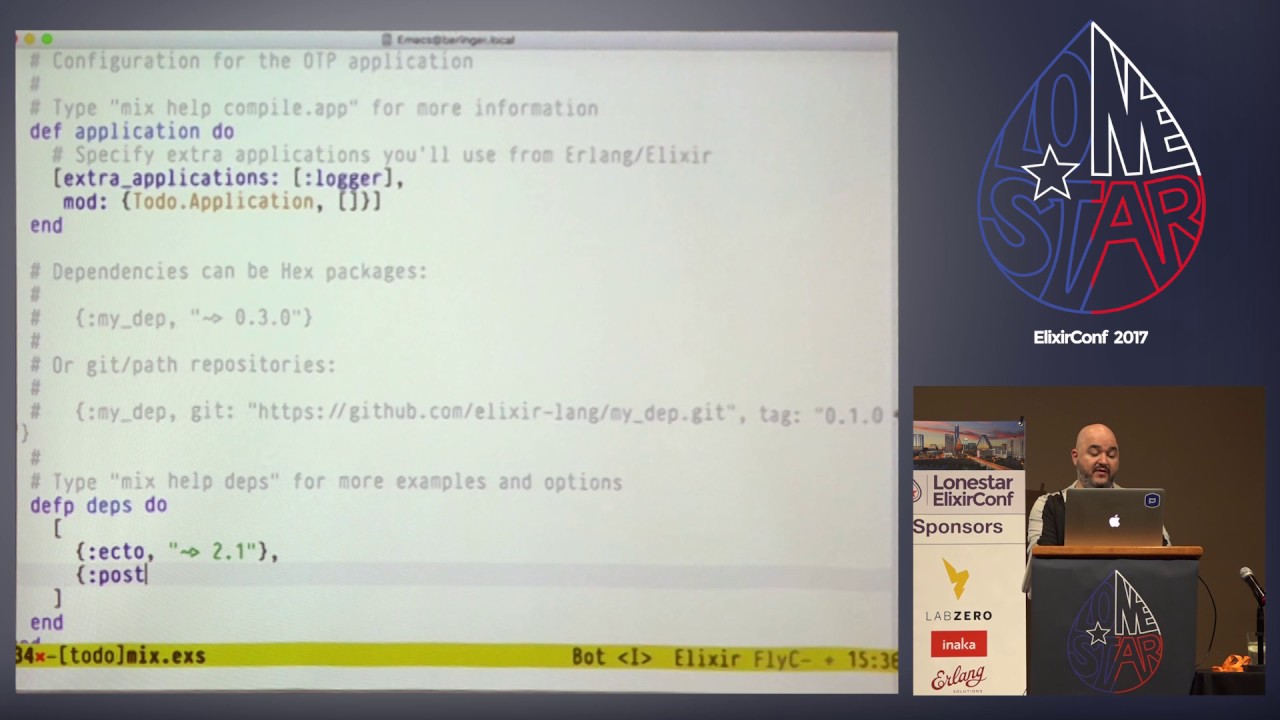
<p>When I was working through Ecto’s concepts and mechanisms, it didn’t really click for me – until I came across some examples by Geoffrey Lessel. In particular his talk at Lonestar ElixirConf 2017 was the key to me:</p>
<p>Using Ecto outside of Phoenix</p><div class="youtube-onebox lazy-video-container" data-video-id="PWJpSRUJDwk" data-video-title="Lonestar ElixirConf 2017- Using Ecto outside of Phoenix by Geoffrey Lessel" data-video-start-time="1357s" data-provider-name="youtube">
  <a href="https://www.youtube.com/watch?v=PWJpSRUJDwk&amp;t=1357s" target="_blank" class="video-thumbnail" rel="noopener nofollow ugc">
    <img class="youtube-thumbnail" src="https://img.youtube.com/vi/PWJpSRUJDwk/maxresdefault.jpg" title="Lonestar ElixirConf 2017- Using Ecto outside of Phoenix by Geoffrey Lessel" width="690" height="388">
  </a>
</div>

<p>He also has some great examples on his blog as well, such as:</p><aside class="onebox allowlistedgeneric" data-onebox-src="https://geoffreylessel.com/2016/from-zero-to-ecto-in-10-minutes/">
  <header class="source">

      <a href="https://geoffreylessel.com/2016/from-zero-to-ecto-in-10-minutes/" target="_blank" rel="noopener nofollow ugc" title="12:00AM - 30 May 2016">Geoffrey Lessel – 30 May 16</a>
  </header>

  <article class="onebox-body">
    <div class="aspect-image" style="--aspect-ratio:690/230;"><img src="https://geoffreylessel.com/images/zero-to-ecto.jpg" class="thumbnail" alt="" width="690" height="230"></div>

<h3><a href="https://geoffreylessel.com/2016/from-zero-to-ecto-in-10-minutes/" target="_blank" rel="noopener nofollow ugc">From Zero to Ecto in 10 Minutes</a></h3>

  <p>In my last post, Using Ecto For Formula 1 Standings, Ishowed you how you can compose Ecto Queries — building them up as you go along.The examples used were taken from a fantasy Formula 1 web application I am building inElixir and the Phoenix...</p>


  </article>

  <div class="onebox-metadata">
    
    
  </div>

  <div style="clear: both"></div>
</aside>
 
	            </div>

	            <div class="base-line">
	                <div class="thread-counters">
	                    <span class="thread-count count-likes js-likers-trigger" title="Likes" data-post-id="36467" data-batch-url="/posts/batch_likers">
                        1
                      </span>
                      <!-- <span class="thread-count js-solved-indicator" title="Marked as solution"></span> -->
	                </div>
	                <div class="go-to-post">
	                  <a title="Go to post" alt="Go to post" href="https://forum.elixirforum.com/t/contexts-a-barrier-too-high-for-newbies/5929/48">Post #47</a>
	                </div>
	            </div>
              <div id="likers-container-36467" 
                   class="likers-container"
                   data-first-post="false"
                   data-batch-url="/posts/batch_likers">
                   <div class="likers-placeholder" 
                     data-likers-post-id="36467"
                     data-batch-url="/posts/batch_likers">
                  <div class="post-likers"></div>
                </div>
              </div>
	        </div>
			

    </div>

    <div class="triangle-top-right type-standard-post cat-standard-post" title="Post #47"></div>
  </section>
</div>
    <div class="postbit" id="36469" data-post-id="36469">
  <section>
    <div class="post-wrap">


					<div class="post-header">
		        <div class="user-avatar">
		          <img alt="brightball" src="https://forum.elixirforum.com/user_avatar/forum.elixirforum.com/brightball/120/17192_2.png" width="120" height="120" />
		        </div>
					
						<div class="user-details">
		          <div class="user-name">
		            <h3>
                  brightball
                  </h3>
		          </div>
						
						</div>
					
					</div>

	        <div class="thread-main">
	            <div class="post-body" data-turbo="false">
								<p>IMO, usually when you start building an app your Context is going to be the initial purpose of your app. Whatever your MVP design goal was to begin with. The place where I think contexts confuse people is in trying to over-engineer it too early.</p>
<p>In a simple web app, for example, I’d start out with 2 contexts:</p>
<ol>
<li>Public</li>
<li>Login (includes sign up / registration / login / tracking / security / etc)</li>
</ol>
<p>As Login context is a pretty natural initial separation. Public is my “dumping ground” where app stuff goes. As you work and start to notice patterns in your application where separate grouping makes more sense, create that separation.</p>
<p>A ruby site that I worked on a few years ago provided a really good example for this. It was a secondary sales site for a niche market that had auctions, classifieds, advertising, login/registration, forums, data imports (from a legacy site), user messaging and a ton of anti-fraud stuff. Within the monolith you had all of these things in the system. Auctions and Classifieds both used Products, but the transaction process for each was different and the subset of related information and rules were both just on top of each other. Advertising had a system for users to buy and preview ads for different parts of the site, while the logic to properly display them in a fast, balanced way and while tracking them was a beast in and of itself.</p>
<p>As it stands now, that site basically has a User and Product models that are at least 1000 lines long as well as a ton of smaller tables, relational tables, etc with models to match. Each one has well over a dozen associations that go down a chain of associations which are a mile long. This was a project that I jumped into after another team had developed it for 8 months and the entire time I worked on it (little over a year), I was still constantly digging through the code trying to figure out what went with what. Contexts would have been absolutely amazing for that project.</p>
<p>Anyway, I say all of that to say this: don’t overthink it at the beginning. When you have an app idea, your initial goal is probably “the context” you just need a name for that. I go with Public because it gives me a clear implication of when something might not belong in there (behaviors that differ when users are logged in, when tooling interfaces are involved, etc). Login and Public are a really good place to start. Then just move things out when a better arrangement becomes clear.</p>
<p>The best thing about it is that you don’t have to decided “Do users belong here or here?” because they might belong in both in some form and contexts let you do that, really easily.</p> 
	            </div>

	            <div class="base-line">
	                <div class="thread-counters">
	                    <span class="thread-count count-likes js-likers-trigger" title="Likes" data-post-id="36469" data-batch-url="/posts/batch_likers">
                        3
                      </span>
                      <!-- <span class="thread-count js-solved-indicator" title="Marked as solution"></span> -->
	                </div>
	                <div class="go-to-post">
	                  <a title="Go to post" alt="Go to post" href="https://forum.elixirforum.com/t/contexts-a-barrier-too-high-for-newbies/5929/49">Post #48</a>
	                </div>
	            </div>
              <div id="likers-container-36469" 
                   class="likers-container"
                   data-first-post="false"
                   data-batch-url="/posts/batch_likers">
                   <div class="likers-placeholder" 
                     data-likers-post-id="36469"
                     data-batch-url="/posts/batch_likers">
                  <div class="post-likers"></div>
                </div>
              </div>
	        </div>
			

    </div>

    <div class="triangle-top-right type-standard-post cat-standard-post" title="Post #48"></div>
  </section>
</div>
    <div class="postbit" id="36471" data-post-id="36471">
  <section>
    <div class="post-wrap">


					<div class="post-header">
		        <div class="user-avatar">
		          <img alt="railsmechanic" src="https://forum.elixirforum.com/user_avatar/forum.elixirforum.com/railsmechanic/120/21830_2.png" width="120" height="120" />
		        </div>
					
						<div class="user-details">
		          <div class="user-name">
		            <h3>
                  railsmechanic
                  </h3>
		          </div>
						
						</div>
					
					</div>

	        <div class="thread-main">
	            <div class="post-body" data-turbo="false">
								<p>I’am also a bit confused how to correctly deal with contexts in Phoenix 1.3 applications.</p>
<p>I’ve watched several screen casts, read some blog posts on how to correctly structure an application with contexts. But until now, I don’t know if it’s the intended/best way to have e.g. a single user schema, maybe in the “Account” context, while other contexts referencing to this schema or to have an independent user schema per context (each referencing to a single “real” database table) which needs to interact with users.</p> 
	            </div>

	            <div class="base-line">
	                <div class="thread-counters">
	                    <span class="thread-count count-likes js-likers-trigger" title="Likes" data-post-id="36471" data-batch-url="/posts/batch_likers">
                        0
                      </span>
                      <!-- <span class="thread-count js-solved-indicator" title="Marked as solution"></span> -->
	                </div>
	                <div class="go-to-post">
	                  <a title="Go to post" alt="Go to post" href="https://forum.elixirforum.com/t/contexts-a-barrier-too-high-for-newbies/5929/50">Post #49</a>
	                </div>
	            </div>
              <div id="likers-container-36471" 
                   class="likers-container"
                   data-first-post="false"
                   data-batch-url="/posts/batch_likers">
                   <div class="likers-placeholder" 
                     data-likers-post-id="36471"
                     data-batch-url="/posts/batch_likers">
                  <div class="post-likers"></div>
                </div>
              </div>
	        </div>
			

    </div>

    <div class="triangle-top-right type-standard-post cat-standard-post" title="Post #49"></div>
  </section>
</div>
    <div class="postbit" id="36475" data-post-id="36475">
  <section>
    <div class="post-wrap">


					<div class="post-header">
		        <div class="user-avatar">
		          <img alt="brightball" src="https://forum.elixirforum.com/user_avatar/forum.elixirforum.com/brightball/120/17192_2.png" width="120" height="120" />
		        </div>
					
						<div class="user-details">
		          <div class="user-name">
		            <h3>
                  brightball
                  </h3>
		          </div>
						
						</div>
					
					</div>

	        <div class="thread-main">
	            <div class="post-body" data-turbo="false">
								<p>Just assume that a user’s table might have 100 columns eventually with little related one off data points or belongs to associations. No one part of your application needs all of them.</p>
<p>Unless you have an admin section that gives full access to every field, you probably only need a small subset of the users table in any given context. Outside of registration/login where you might need username, email address, password, last login, etc most other contexts will only need the user id and whatever related_record_id associations are relevant.</p>
<p>At the same time though, see the over-engineering post I just made. Don’t hesitate to use a simple dumping ground until the smaller subsets become clear. It’s not going to hurt anything. 90% of refactoring in Elixir is just moving things around.</p> 
	            </div>

	            <div class="base-line">
	                <div class="thread-counters">
	                    <span class="thread-count count-likes js-likers-trigger" title="Likes" data-post-id="36475" data-batch-url="/posts/batch_likers">
                        1
                      </span>
                      <!-- <span class="thread-count js-solved-indicator" title="Marked as solution"></span> -->
	                </div>
	                <div class="go-to-post">
	                  <a title="Go to post" alt="Go to post" href="https://forum.elixirforum.com/t/contexts-a-barrier-too-high-for-newbies/5929/51">Post #50</a>
	                </div>
	            </div>
              <div id="likers-container-36475" 
                   class="likers-container"
                   data-first-post="false"
                   data-batch-url="/posts/batch_likers">
                   <div class="likers-placeholder" 
                     data-likers-post-id="36475"
                     data-batch-url="/posts/batch_likers">
                  <div class="post-likers"></div>
                </div>
              </div>
	        </div>
			

    </div>

    <div class="triangle-top-right type-standard-post cat-standard-post" title="Post #50"></div>
  </section>
</div>
</template></turbo-stream><turbo-stream action="replace" target="load-more-container"><template><div id="load-more-container" class="load-more-container">
    <a class="load-more-button" data-turbo-stream="true" href="/topics/5929/load_more?page=6">Load more posts (116 remaining)</a>
</div></template></turbo-stream>